Showing posts with label neurofeedback. Show all posts

Friday, January 27, 2012

New Review of Neurofeedback Treatment for ADHD — Current State of the Science

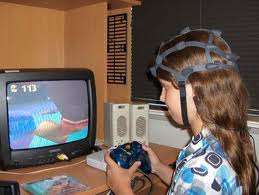
Neu­ro­feed­back — also known as EEG Biofeed­back — is an approach for treat­ing ADHD in which indi­vid­u­als are pro­vided real-time feed­back on their brain­wave activ­ity and taught to alter their typ­i­cal EEG pat­tern to one that is con­sis­tent with a focused and atten­tive state. Accord­ing to neu­ro­feed­back pro­po­nents, this often results in improved atten­tion and reduced hyperactive/impulsive behavior.
Sev­eral years ago I sum­ma­rized the sci­en­tific sup­port for neu­ro­feed­back treat­ment — see here - and noted that although pos­i­tive find­ings had been reported in mul­ti­ple pub­lished stud­ies, lim­i­ta­tions of these stud­ies led many researchers to regard neu­ro­feed­back as a promis­ing, but unproven treatment.
The Amer­i­can Psy­cho­log­i­cal Asso­ci­a­tion has estab­lished a 5-level sys­tem for grad­ing the evi­dence in sup­port of men­tal health treat­ments. These grades, and their asso­ci­ated lev­els of research sup­port, are as follows:
Level 1 Not Empir­i­cally Supported 
Sup­ported only through anec­do­tal evi­dence or non-peer reviewed case-studies.
Level 2 Pos­si­bly Efficacious 
Shown to have a sig­nif­i­cant impact in at least one study, but the study lacked a ran­dom­ized assign­ment between controls.
Level 3 Prob­a­bly Efficacious 
Shown to pro­duce pos­i­tive effects in more than one clin­i­cal, obser­va­tional wait list or within-subject or between-subject study.
Level 4 Efficacious 
Shown to be more effec­tive than a no-treatment or placebo con­trol group; the study must con­tain valid and clearly spec­i­fied out­come mea­sures, and it must be replic­a­ble by at least two inde­pen­dent researchers demon­strat­ing the same degree of efficacy.
Level 5 Effi­ca­cious and Specific 
Shown to be sta­tis­ti­cally supe­rior to cred­i­ble placebo ther­a­pies or to actual treat­ments, and it must be shown as such in two or more inde­pen­dent studies.
Using the grad­ing sys­tem above, and based on stud­ies pub­lished through 2005, the con­clu­sion reached by the Pro­fes­sional Advi­sory Board of CHADD was that evi­dence sup­port­ing neu­ro­feed­back treat­ment for ADHD war­ranted a Level 2, or ‘Pos­si­bly Effi­ca­cious’. You can read CHADD’s sum­mary state­ment at www.help4adhd.org/en/treatment/complementary/WWK6A and I believe you will find this to be of interest.
Based on a research base that includes more recently pub­lished stud­ies, how­ever, the con­clu­sions reached by Arn et. al., (2009) were far more pos­i­tive. These researchers con­ducted a meta-analysis of 15 stud­ies, 4 of which were reported to be ran­dom­ized con­trolled tri­als. Their con­clu­sion was that “Neu­ro­feed­back treat­ment for ADHD can be con­sid­ered ‘Effi­ca­cious and Spe­cific’ (Level 5) with a large effect size for inat­ten­tion and impul­siv­ity and a medium effect size for hyper­ac­tiv­ity.” This is a very dif­fer­ent con­clu­sion from the CHADD review and it is under­stand­able that par­ents, edu­ca­tors, and pro­fes­sion­als would be con­fused about the strength of the evi­dence base for neu­ro­feed­back treatment.
New Review Pro­vides Some Clarification
The Jour­nal of Atten­tion Dis­or­ders recently pub­lished an updated review of neu­ro­feed­back treat­ment for ADHD that helps clar­ify its sci­en­tific sup­port [Loft­house et. al., (2011). A review of neu­ro­feed­back treat­ment for ADHD. Jour­nal of Atten­tion Dis­or­ders, pub­lished online 16 Novem­ber 2011. DOI: 10.1177/1087054711427530]. The authors include sci­en­tists who have con­ducted research tri­als of neu­ro­feed­back and also been part of the Mul­ti­modal Treat­ment Study of ADHD (MTA Study), the largest ADHD treat­ment study ever con­ducted. They are thus well equipped, in my view, to pro­vide a thor­ough and objec­tive review of a com­pli­cated area.
The research base for their review was 14 stud­ies of neu­ro­feed­back treat­ment for chil­dren with ADHD in which par­tic­i­pants were ran­dom­ized to neu­ro­feed­back treat­ment or a con­trol con­di­tion. Eleven of these stud­ies were con­ducted between 2005 and 2010; this speaks to the strong accel­er­a­tion of neu­ro­feed­back research, which is a wel­come development.
Their review was lim­ited to those that ran­domly assigned chil­dren to treat­ment or con­trol con­di­tions which is an essen­tial ele­ment of rig­or­ous treat­ment stud­ies. For each study, the authors pro­vide a detailed cri­tique it’s strengths and lim­i­ta­tions. As a detailed review of the indi­vid­ual study cri­tiques is beyond what I can do here, below I sum­ma­rize the authors’ con­clu­sions on the state of the science.
Results Sum­mary
Treat­ment effects
When aver­aged across the stud­ies for which appro­pri­ate out­come data was avail­able, the over­all mean effect size (ES) was .79 for inat­ten­tion mea­sures, and .71 for hyperactivity/impulsivity mea­sures. These are in a range that would be con­sid­ered ‘large’ for inat­ten­tion and ‘mod­er­ate’ for hyperactivity/impulsivity and are below what is typ­i­cally reported for stim­u­lant med­ica­tion. Five of the stud­ies showed neu­ro­phys­i­o­log­i­cal changes that were spe­cific to neu­ro­feed­back treat­ment. Over­all, these results are con­sis­tent with ben­e­fi­cial effects of neu­ro­feed­back treat­ment for ADHD.
Sum­mary of study limitations
The authors iden­ti­fied 5 dif­fer­ent lim­i­ta­tions that under­mine the con­clu­sions about neu­ro­feed­back treat­ment effi­cacy that can be made.
1. Min­i­mal use of Triple Blinding 
The ideal study would be one where chil­dren, par­ents and/or teach­ers who rate children’s behav­ior before and after treat­ment, and clin­i­cians don’t know whether the child received active treat­ment. This elim­i­nates — or at least strongly reduces — the like­li­hood that appar­ent ben­e­fits asso­ci­ated with neu­ro­feed­back can be explained by expec­ta­tions that the child would benefit.
Only 4 of the 14 stud­ies uti­lized triple blind pro­ce­dures, how­ever, and in 6 of the stud­ies none of these 3 sources was blind.
2. Nature of Con­trol Group 
The strongest neu­ro­feed­back treat­ment study would be one that used ‘sham’ treat­ment for chil­dren ran­dom­ized to the con­trol group, i.e., par­tic­i­pants receive feed­back that is not linked to the EEG state that is the focus of actual train­ing. The ben­e­fit of this is that — in the­ory — it keeps chil­dren, par­ents, and clin­i­cians blind to whether real treat­ment is being pro­vided, thus elim­i­nat­ing poten­tial biases to the out­come rat­ings they provide.
For the 14 stud­ies review, how­ever, only 4 employed sham treat­ment. And, of those 4, only 1 used what was felt to be a truly cred­i­ble ‘sham’. In the absence of a cred­i­ble ‘sham’ treat­ment, con­duct­ing a ‘triple blind’ study is not possible.
The other stud­ies either used ‘wait list’ con­trols or com­pared neu­ro­feed­back treat­ment to a dif­fer­ent type of cog­ni­tive train­ing. The use of wait list and alter­na­tive treat­ment con­trol groups are preva­lent in the treat­ment lit­er­a­ture, but are less able than a true ‘sham’ con­di­tion to unequiv­o­cally estab­lish that treat­ment gains asso­ci­ated with neu­ro­feed­back are attrib­ut­able to the feed­back chil­dren receive on their EEG state.
3. Insuf­fi­cient iden­ti­fi­ca­tion, mea­sure­ment, and con­trol of con­comi­tant treatments
Chil­dren par­tic­i­pat­ing in these stud­ies were fre­quently receiv­ing other treat­ments as well, either med­ica­tion, psy­chother­apy, or edu­ca­tional inter­ven­tions. Because the pres­ence and changes in con­comi­tant treat­ments tended not to be care­fully mon­i­tored, how­ever, pos­i­tive change asso­ci­ated with neu­ro­feed­back may have been caused, or at least influ­enced in some way, by unre­ported changes in these other treatments.
4. Gen­eral lack of post-treatment follow-up 
Fol­low­ing chil­dren beyond the end of neu­ro­feed­back treat­ment is crit­i­cal for deter­min­ing long-term effi­cacy and/or the need for booster ses­sions. How­ever, only 3 of the stud­ies included a post-treatment fol­low up of neu­ro­feed­back. And, in these stud­ies, the pro­ce­dures for assess­ing the sus­tain­abil­ity of treat­ment ben­e­fits were judged to be com­pro­mised. Thus, the authors con­clude that the dura­tion of any gains asso­ci­ated with neu­ro­feed­back remains largely unknown.
5. Lim­ited atten­tion to pos­si­ble adverse side effects
Although neu­ro­feed­back is described as safe and with­out side effects, only 1 study actu­ally mon­i­tored and reported adverse events that chil­dren and par­ents related to treat­ment. Although no such effects were found, some have argued that all truly effec­tive treat­ments pro­duce some side effects in some per­cent­age of indi­vid­u­als who receive them. Thus, rather than not attend­ing to this pos­si­bil­ity in neu­ro­feed­back stud­ies because the treat­ment is assumed to be safe, the authors sug­gest that this is an area where greater scrutiny is warranted.
Over­all Summary
Based on their review of the lit­er­a­ture, the authors argue that “…due to the lack of blind­ing and sham con­trol con­di­tions in ran­dom­ized stud­ies” neu­ro­feed­back treat­ment for ADHD should not be con­sid­ered ‘Effi­ca­cious and Spe­cific’ as was con­cluded in the 2009 review by Arn and his colleagues.
Instead, they believe that a grade of 3 on the APA evi­dence scale, which cor­re­sponds to ‘Prob­a­bly Effi­ca­cious’ is war­ranted. They note that a large mul­ti­site triple-blind sham-controlled Ran­dom­ized Con­trolled Trial is needed to set­tle the issue.
Clearly, it is pos­si­ble to review the same evi­dence and reach a dif­fer­ent con­clu­sion. Some would argue that the authors are overly cau­tious in the evi­dence grade they assign and that more is being required of neu­ro­feed­back than of other ADHD treat­ments. For exam­ple, although the long-term ben­e­fits of neu­ro­feed­back treat­ment may remain rel­a­tively unknown, evi­dence on the long-terms ben­e­fits of med­ica­tion treat­ment is also limited.
One could also argue that requir­ing a triple-blind trial with a cred­i­ble sham con­di­tion is unrea­son­able because this is a higher stan­dard than that employed most psy­chother­apy out­come research. In stud­ies to estab­lish the effi­cacy of behav­ioral treat­ment for ADHD, for exam­ple, a triple blind trial is not pos­si­ble because clin­i­cians know what treat­ment they are pro­vid­ing and par­ents will know what treat­ment their child is receiv­ing. Despite this, behav­ior ther­apy is con­sid­ered a strong evidence-based treat­ment for ADHD.
In response to this objec­tion, the authors argue that the high­est stan­dard of sci­en­tific rigor should be required for any treat­ment offered to the pub­lic for which triple blind stud­ies are pos­si­ble (they are not pos­si­ble for behav­ior ther­apy), and which are not pre­cluded by strong eth­i­cal con­sid­er­a­tions. They note that this is espe­cially true for neu­ro­feed­back, as such a study is pos­si­ble and the treat­ment requires sub­stan­tial time, effort, and expense.
Some Final Thoughts
My view is con­sis­tent with the authors. I would very much like to see the type of study they call for and believe the evi­dence grade they sug­gest of ‘Prob­a­bly Effi­ca­cious’ is appro­pri­ate. Hav­ing this con­clu­sion pub­lished in a sci­en­tific jour­nal that does not focus on neu­ro­feed­back research rep­re­sents sig­nif­i­cant progress for the field as it was not too long ago that a com­monly held view seemed to be that there was lit­tle if any cred­i­ble evi­dence sup­port­ing this treatment.
It is also impor­tant to rec­og­nize that what remains unclear is not whether chil­dren with ADHD who receive care­fully admin­is­tered neu­ro­feed­back will gen­er­ally derive some ben­e­fit — the stud­ies reviewed in this arti­cle estab­lish that — but, rather, why does ben­e­fit occurs. Here is what the authors say:
…due to the lack of con­trols, it is unclear as to whether the large ESs for impul­siv­ity and inat­ten­tion and the medium ES for hyper­ac­tiv­ity are due to the active com­po­nent of EF and/or non­spe­cific treat­ment factors.”
In other words, the research estab­lishes that neu­ro­feed­back treat­ment yields ben­e­fits for core ADHD symp­toms but is not clear on what explains those ben­e­fits. Is it the spe­cific feed­back on EEG activ­ity and learn­ing to con­trol that activ­ity that pro­duces the gains? Or do non­spe­cific fac­tors asso­ci­ated with the treat­ment, e.g., expectancy effects, clin­i­cian atten­tion, praise for the effort involved, etc., that actu­ally accounts for the gains?
This is the impor­tant sci­en­tific ques­tion that remains to be answered. In the mean­time, how­ever, the research reviewed here indi­cates that if par­ents obtain high qual­ity neu­ro­feed­back treat­ment for their child there is a rea­son­able basis for expect­ing that ben­e­fits will occur. The deci­sion to do so should be made with the knowl­edge that med­ica­tion treat­ment and behav­ioral ther­apy would be regarded as hav­ing stronger research sup­port at this time.
To dis­miss neu­ro­feed­back treat­ment sim­ply as ‘unproven’, how­ever, ignores the con­sid­er­able research on this approach that has been con­ducted. Help­ing fam­i­lies bet­ter under­stand the strengths and lim­i­ta­tions of this research can enable them to make a bet­ter informed deci­sion about whether to con­sider this treat­ment option for their child

Saturday, January 7, 2012

Neurofeeback for Addiction Recovery

What is the best treatment protocol for addiction recovery?

The answer: "It depends on the person's brain." However, almost for certain at some point in a complete series of neurofeedback sessions a person who is recovering from addiction will benefit from receiving the alpha-theta protocol. The evidenced-based symptom-oriented evaluation will suggest alpha-theta training as a starting protocol for the majority of people with addictions. However, there will be some individuals who will receive alpha-theta after first receiving training with other protocols. It all depends on the results of their individualized assessment.

There is a 2008 study that compared the clinical EEG signals of an alcoholic group to a control group. The results suggested that when the alcoholics were exposed to the stimulus, brain cells were activated and emitted higher voltage than that of the control group. We know that a less active brain produces an increase in alpha brain wave, which is the idle rhythm of the cortex. It means that when the brain is excessively aroused or perceives danger the thinking and reasoning part of the brain gets bypassed. In other words, people react first and ask questions later. For an addicted person this too often has severe consequences.

An addicted brain has its object of addiction ranked nearly as important as air, water and food. Getting sober threatens their long-term relationship with something the brain mistakes for survival. The more effective the intervention, the more resistance one could expect. Most people find change stressful, but with the addictive population this mechanism is significantly magnified, which sabotages their ability to apply treatment learned solutions in their lives. EEG biofeedback, and in particular alpha-theta, appears to work by significantly reducing this acute survival response. It works by training the cortex to remain engaged and not be bypassed as usual during a fight-or-flight reaction. The result is improved compliance in treatment, less recidivism, and continued 12-step or faith-based participation after leaving treatment.

What is alpha-theta protocol? Alpha-theta protocol is named after the two main types of brainwaves that are involved during this protocol. It brings on a deep witness state where people can often observe having dream-like experiences where they calmly observe things that would ordinarily cause them stress. Issues such as distorted beliefs and trauma affect how the brain operates at a sub-conscious level. With alpha-theta, clients train their brain to let go of response patterns that are based on old or false beliefs so they can enjoy life with a new and healthier perspective. In addition, the brain opens up to complementary psychological therapies. People who experience alpha-theta training report that they are more connected emotionally, have increased peace and serenity, are more open-minded and better able to access and integrate repressed experiences. They also seem much more observant of opportunities and have significantly less fear in perusing them.

Alpha-theta is the only neurofeedback protocol proven effective for the addicted population in a large randomized controlled trial. The study was conducted by UCLA and published in "The American Journal of Drug and Alcohol Abuse" in 2005.

www.BrainPaint.com

Thursday, January 5, 2012

Peak Performance Training

Peak Performance Training

Neurofeedback or EEG Biofeedback helps the brain regulate itself and self regulation is key to optimal brain functioning. It is best considered as mental fitness training that over time teaches the individual's brain improved skills of managing attention, arousal (level of excitability), and affective or emotional state. The individual's brain already manages attention, arousal, and affective state to a certain degree, and the relevant mechanisms are in place to do so. Simply exercising those mechanisms strengthens and engages them, and allows the individual to have better control over his or her own behavior automatically. And when your brain is performing in its optimal manner, you are able to perform at your peak. Isn't this just what we all want. Life is so much better and easier when our brain is working at its best. We are calmer, more focused, attentive, confident and able to enjoy life more. When we achieve this, we are just better at whatever we choose to do. Become a better parent, a better spouse, a better boss, a better student, a better performer, a better athlete, a better employee - A BETTER SELF. Become YOUR BEST SELF!

RELAX, ENJOY LIFE and ACCOMPLISH MORE.

Stress is a total body response to a real or imaginary threat. It can save lives in emergencies by producing knee-jerk reactions which were indispensable to our ancestors who routinely had to flee from predators. However, in today's world, our survival is usually not at stake, and the problems we face require a calm mind for creative solutions. Unfortunately, the very parts of the brain that allow such reasoned response are bypassed under stress. Instead, we make decisions based on fear. One of the goals of the neurofeedback software is to evolve the reactive brain into one that is interactive, and not only during a crisis but in everyday life.

When the human body and mind perceives a threat it goes into flight or flight mode. When this happens stress chemicals flood the body causing the heart to beat faster, the blood vessels to constrict, perspiration and breathing to increase and muscles to become tense. In addition, during this phase the auto immune system also becomes depressed making the body more vulnerable to illnesses. After the threat goes away, your body and mind are not quick to turn these responses off and often do not return to their original state and in part the body and mind continues with this unhealthy response to stress. The heart continues to be stressed and other muscles continue to hold tension. This "normal" stress response is ideally suited for real life and death situations. But when we have this response to other stressors in our lives that are not life or death, this response is over kill.

After a while a person can get used to these stress symptoms in their body, if they do not learn to cope with the stressors in their lives these symptoms start to cause problems in the body, even though the person may be unaware of it.

If someone does not pay attention to these signs and symptoms they can evolve into anxiety, depression, headaches and other pains, stomach and bowel problems and coldness in hands and feet. In addition the stress hormone cortisol can make you inattentive, disorganized and unable to remember simple tasks. The body and mind can no longer cope with the ongoing physiological changes and you are receiving a strong warning to make changes to your life.

Neurofeedback helps your brain to respond better to stresses. It can calm down your "over the top" responses to everyday challenges. Those things that you know shouldn't bother you, stop having an effect. And irritations start to roll right off. You are able to calmly approach your challenges, focus on your end goal and be your best.

For those who have high stress careers or high stress demands on life, have you already begun to see the effects of this over the top response to stress? Is it impeding your performance? Would you like to learn how to respond to these stressors in a healthier way - one that shields your mind and body from all of those disastrous effects and at the same time become a winner in your field? Take charge of your life, by empowering your brain to work at its optimum.

Tuesday, January 3, 2012

Healthy Brain. Healthy Life


 Do you feel like you're not living up to your potential? Is your life lacking a sense of ease, joy or peace? Neurofeedback can dramatically improve the quality of your life.

Many people understand the benefits of a good diet or exercise program, even if they find it difficult to apply in their lives.  Modern society spends billions of dollars trying to stay physically fit and healthy.  Yet nothing impacts the quality of our lives as directly as our mental fitness and quality of our outlook.  Think of neurofeedback as mental yoga that improves the brain’s flexibility and resilience.  A healthy mind guides a healthy body.

World Cup Italian soccer players have turned to neurofeedback to gain peak performance and get a competitive edge.

 Through a series of sessions with the BrainPaint system, your brain reorganizes itself and functions more effectively. When your brain functions efficiently, you feel more integrated and whole and your body functions better. After training many people experience less stress, improved academic, athletic, creative and work performance as well as more confidence and joy. Many bodily complaints drop away.

Sunday, January 1, 2012

Can't Get ADHD Drugs? Change to medication-free treatment.

ADHD meds are in short supply and if you haven’t noticed yet – chances are you will.
Hundreds of patients are finding that their pharmacies don’t have enough pills to fill their prescriptions. The problem lies with the troubled partnership between drug manufacturers and the Drug Enforcement Agency (DEA). Pharmaceutical companies are out to maximize their profits …the DEA wants to minimize drug abuse. Caught in the middle are millions of children and adults who rely on the pills to help them stay calm and focused.
Here’s an idea – forget the drugs and choose a medication-free form of treatment. No dependency, no worry of pill shortages, and no fear of abuse.
ADHD affects approximately 3-5% of school age children in the U.S. The majority of children are treated with stimulant medication. Alternative treatments will bypass the risk of developing cardiovascular toxicity of amphetamine and methylphenidate.
My preferred alternative method of treatment is Neurofeedback – specifically EEG Biofeedback with the BrainPaint system. EEG Biofeedback is a well-established, clinically-proven, non-drug treatment modality for ADHD.  Check out these testimonials.

Saturday, December 17, 2011

Neurofeedback benefits kids with ADD

Children who have ADHD often have difficulty regulating brain activity. A new study, conducted by German and Swiss researchers, demonstrates that neurofeedback training may help. Neurofeedback is a method of training the brain, or shaping brain wave activity which for some children results in improved behavior and reduction of hyperactivity and impulsivity. The technique doesn't work for everyone and is not a replacement for drug treatment, but may be used as a companion, as MSNBC reports.

Children in the study worked on a game like computer program that had them activate or deactivate portions of the brain and they were rewarded with points. After two weeks of the computer program they used red and blue cards to practice the brain activation and deactivation. The other group of children took part in group therapy sessions. Results indicated that parents and teachers, although to a lesser extent, reported great improvement in the children who took part in neurofeedback. It was also noted that kids did better when parents encouraged, rewarded, and reminded them to practice with the red and blue cards. In all eight children learned to successfully regulate brain activity while nine did not.


Charles P Fox

Thursday, December 15, 2011

EEG Biofeedback Forms New Connections


“Treating Barbara’s family made it clear to me that mind, brain, and relationships are not separate elements of life—
they are irreducible aspects of one interconnected triangle of well
 Mindsight: The New Science of Personal Transformation (Bantum, 2010)
Daniel J. Siegel, M.D. Author of
   What about someone whose brain is so impaired it becomes an obstacle to beginning a mindfulness practice? Some traumarelated or organic neurologic dysfunction will significantly reduce the likelihood that one will develop an effective meditation/mindfulness practice. The woman referred to in the above quote, Barbara, suffered a traumatic brain injury as a result of a car crash. Her brain injury subsequently affected each individual in her family unit and their wellbeing.
Dr. Dan Siegel eloquently writes about how our mind, brain and relationships co
 injury, when spontaneous remediation is no longer expected. The symptoms which accompany a head injury which neurofeedback may help are: loss of energy, headaches, difficulty concentrating, anxiety, obsessive thoughts, depression, rage, seizures, insomnia and even personality changes. Sometimes people are not even awareorflight reaction. It improves the ability of a person to quiet their mind, therefore, better prepare them for a daily practice of what Dr. Dan Siegal calls “Mindsight”. In other words, neurofeedback increases the brain’s capacity and prepares a person for a daily mindfulness practice, which in turn facilitates change to manifest in their life.
EEG biofeedback, also known as neurofeedback, activates the brain’s natural ability to form new connections in response to experience. This proven form of brain training has restored brain function in many individuals who have suffered from a traumatic brain injury. The training appears to be effective even years post.
 Or, perhaps they have no memory of the event as is the case of a forceps birth or did not make the connection that their issues developed after general anesthesia. In these instances neurofeedback may be helpful in addressing what we call the hardware or anatomical functioning of the brain to increase the readiness of an individual to add a mindfulness practice to their daily life.
Populations of people who have experienced trauma or have severe anxiety, addiction, fears and phobias have what we consider a software issue – their brain too easily goes into an acute survival response.

Neurofeedback appears to work by training the cortex to remain engaged and not be bypassed. In the process of awakening the mind, people need to let go of control. Most people have beliefs about what letting go of control would look and feel like, but BrainPaint gives a person an experience of it through realtime feedback. For example, when a person is increasing his or her present awareness it will trigger sound and visual cues and when there is an increase in gamma bursts, a brainwave frequency associated with an increase in new neural connections which happens when the brain is learning a new behavior, there is a corresponding increase in the brightness of the fractals on the screen. Think of neurofeedback as learning mindfulness with training wheels.

Friday, December 9, 2011

Military Sexual Trauma Related to PTSD

 By Robert Weiss LCSW, CSAT-S


Many military veterans suffer from PTSD related to experiences of sexual trauma. An even greater concern is the alarming amount of stigma surrounding the discussion and treatment of PTSD and addiction within the military community.

In recent decades, these addictions and coping mechanisms have become more sexualized, manifesting in many cases as porn addiction. By addressing this dynamic, we can help veterans who are dealing with addiction by demystifying the stigma surrounding their methods of coping, i.e. addiction.
While it has been reported that a number of men and women have sued the Department of Defense for “allowing a military culture that fails to prevent rape,” a Pentagon spokesman said that Secretary of Defense Robert Gates was working to ensure that the military was “doing all it can to prevent and respond to it,” reported The New York Times. But the problems persist and more and more vets and their loved ones are seeking solutions.
It is important to note that trauma and addiction affect men and women; and it is equally difficult for both to speak out against it. One female vet recounted this story: “You fear for life a lot of times. I constantly reevaluated everything as to whether I should suck it up or take the risk of saying something. I sucked it up for a while; I just thought, ‘I’ll do whatever it takes.’” The result of bottling up trauma leads many to deal with their psychological pain with addictive behaviors.

More Clinical Help Is Needed
Vets that speak out about the widespread issue have remarked that “more clinical help is needed,” especially for female vets whose “programs [too often] attempt to mirror men’s programs” that are typically “geared toward drug and alcohol abuse and addiction.”
The statistics on military sexual trauma (MST) among women are staggering, with 42% reportedly experiencing it. Additionally, studies have found that MST was more likely to lead to PTSD than other military or civilian traumatic events, which would include witnessing engagement related deaths.

Porn Addiction in Veterans

Given the proactive nature of military life, some veterans have started blogs sharing stories about their struggles with porn addiction, shedding light on the broader military addiction epidemic. Sites like Feed The Right Wolf have seen upwards of 200,000 visitors. Feed’s owner contended while he’s “not an expert…it is important to share the message about the dangers of porn addiction,” mainly because “there aren’t many other sites talking about [it].”
Experts have also weighed in on the gravity of this problem. In the article, Addicted to Online Porn: X-rated Internet Explosion Wreaks Havoc with Troops’ Careers & Lives, author Jon R. Anderson stated that “the seamy side of Porn 2.0 is picking off military marriages and killing promising careers like a shadow army of well-placed snipers.”
Reflecting on these issues, Capt. Diana Colon, a therapist who heads an Army mental health clinic in Schweinfurt, Germany, said recent engagements like Afghanistan and Iraq “have created a new generation of dysfunctional pornography abusers.” The tragic reality of porn abuse has been that many retired veterans and their spouses divorce as a result of the addiction. According to a 2002 survey of 1,600 top divorce lawyers, more than half of all divorces involved a spouse hooked on porn sites.

*BrainPaint an EEG Biofeedback system for PTSD has proven to be an easy solution for treatment.

Monday, November 28, 2011

A Kid Benefits from Neurofeeback

Migraines   PTSD  Addiction  TBI

I could include far more links than I've listed above...but the benefits of EEG Biofeedback are plenty! 

Recently I've had the privilege to work with a seven year old who used BrainPaint to improve his attentional/focus issues.  This delightful young man was having a number of behavioral issues at school - his teachers had implemented a behavioral chart which was not effective - and his parents only saw half of the problems at home that he was reported to have at school.
After just 10 sessions there was a noticeable improvement in his classroom behavior and now after 15 sessions he is able to exercise impulse control and make good behavioral choices. 

His parents are against medication for treating behavioral issues...and with an ADD/ADHD diagnosis or not they were not going to place him on medication as a form of treatment. It has been so fulfilling to see this little guy improve and know that he has already benefited from treatment and after a few more sessions won't require any more! 

If you've been looking for an alternate approach to tackling anxiety, depression, addiction, or just want to sharpen your skills then give BrainPaint a try. It's truly life changing.
 

Five Dimensions of Touch

The Five Dimensions of Touch: The Key to Bypassing Sexual Power Struggles  By Barry McCarthy, Ph.D. “Are we going to have sex or not?” ...